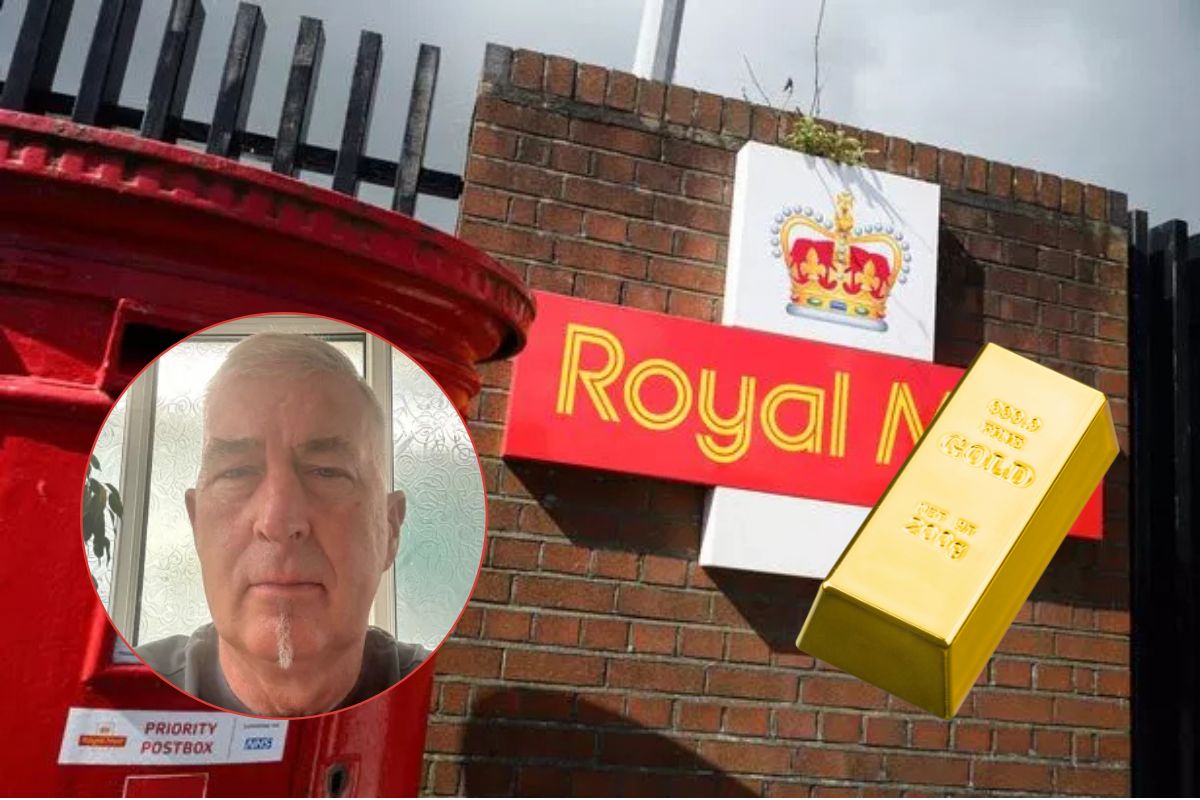
A Devon man who paid for Royal Mail’s “gold standard” Special Delivery Guaranteed service and purchased additional insurance cover up to £10,000 has been told the maximum compensation he’ll receive for his missing gold bar worth nearly £10,000 is just £750.
Rob Hobson, 65, from Torquay, bought a 100g gold Britannia bar using money from his late father’s inheritance and had agreed a buyback offer from the Royal Mint valued at £9,731, with the proceeds intended to boost his pension just 11 months before retirement.
Despite sending the gold bar via Special Delivery Guaranteed next day by 1pm and paying for what he believed was additional insurance cover including “consequential loss up to £10k,” the item never arrived at its destination.
Royal Mail has launched an investigation and Devon and Cornwall Police are carrying out inquiries after the theft was reported, but Rob’s own investigation with delivery office staff uncovered the only logical conclusion: someone stole it.
The parcel was scanned into a sealed bag at Exeter along with other parcels destined for London, yet whilst every other item in that sealed bag arrived at its destination, Rob’s gold bar simply vanished.
The “Extra Insurance” That Turned Out to Be Worthless
Rob posted his gold bar on October 15th using what Royal Mail describes as its “gold standard” Special Delivery Guaranteed next day by 1pm service.
He paid for additional insurance cover, believing this would protect him if anything went wrong with such a valuable item.
“I paid for additional insurance cover, including consequential loss up to £10k and started tracking my parcel using the reference number,” Rob explained.
The tracking showed the parcel arriving at Exeter from Torquay, being processed, then heading out to Romford at 8:21am. That status didn’t change over the weekend.
After contacting the Royal Mint and confirming they hadn’t received the item, Rob finally reached Royal Mail and received an “escalated incident call back” informing him the item was lost and he would need to submit a claim.
That’s when he discovered the devastating truth about his “additional insurance.”
“Part way through filling in the form, a message came up to say maximum claim was £750 and they would take 30 days to process,” Rob said.
Despite paying for what was described as insurance cover “including consequential loss up to £10k,” the actual maximum compensation Royal Mail would pay was just £750 – less than 8% of the gold bar’s value.
For someone who’d carefully purchased what he believed was comprehensive insurance specifically to protect a £10,000 item, discovering the maximum payout was £750 represents either catastrophic miscommunication or deliberately misleading insurance terms.
The Investigation That Pointed to Only One Conclusion: Theft
Frustrated by Royal Mail’s lack of answers, Rob decided to visit the Exeter sorting office in person to speak with managers about what had happened to his parcel.
“I decided to go to the Exeter sort office and spoke to two managers who were horrified and said it can’t have disappeared but had,” Rob explained.
The managers were able to access Royal Mail’s internal systems and trace exactly what happened to the parcel through the network.
“They could see it being scanned through their system and then into a sealed bag along with other parcels,” Rob said.
This is where the story becomes damning for Royal Mail’s security procedures.
“However it seems my parcel never arrived at London despite all the other parcels in that bag did,” Rob continued.
Think about what this means. The gold bar was scanned into a sealed bag at Exeter along with multiple other parcels, all destined for London. Every single other item in that sealed bag arrived at its London destination as expected.
Only Rob’s £10,000 gold bar vanished from a supposedly sealed bag whilst in Royal Mail’s custody.
“The only way it could have disappeared was if someone intervened,” Rob concluded – a polite way of saying someone at Royal Mail stole it.
The managers promised to get back to Rob but never did, and he was simply told “an internal investigation would take place” with no further updates provided.
“I Don’t Want Compensation. I Want My Gold Bar Back”
For Rob, who’s just 11 months away from retirement and was planning to use the gold bar proceeds to boost his pension, the loss represents a devastating blow.
“Nearly 10k gone missing, which has a massive impact on my future,” he said.
He added: “I put my trust in the Royal Mail. The terms I sent it surely says it all…SP Guaranteed next day!”
But Rob isn’t interested in Royal Mail’s maximum £750 compensation offer, even though that’s apparently all he’s entitled to despite paying for insurance that supposedly covered up to £10,000.
“I don’t want compensation. I want my gold back. Someone knows where it is,” he stated bluntly.
He’s absolutely right. Someone does know where it is – specifically, whoever “intervened” to remove a £10,000 gold bar from a sealed bag whilst leaving every other parcel in that bag untouched.
Rob has reported the theft to Devon and Cornwall Police, who confirmed they’re carrying out inquiries, though what exactly they can do when the item disappeared from within Royal Mail’s sealed bag system remains unclear.
The “Naive” Trust That Cost £10,000
Looking back on the experience, Rob admits he was perhaps too trusting of Royal Mail’s ability to safely handle valuable items.
The man bought gold using his late father’s inheritance, carefully arranged a buyback with the Royal Mint, purchased what he believed was comprehensive insurance, and used Royal Mail’s premium “gold standard” service specifically designed for valuable items.
He did everything right according to Royal Mail’s own guidelines for posting valuable items.
And yet the gold bar still vanished from a sealed bag in transit, Royal Mail’s “internal investigation” has provided no answers, and the “additional insurance cover including consequential loss up to £10k” turned out to have a maximum payout of just £750.
For the 65-year-old facing retirement in less than a year, discovering that £10,000 of his pension fund has simply evaporated because he trusted Royal Mail to deliver what they promised represents more than financial loss – it’s a complete betrayal of that trust.
Royal Mail’s Response (Predictably Inadequate)
Royal Mail confirmed it was investigating and would be in direct contact with Mr Hobson, adding that it “took the safety and security of all items in its care extremely seriously.”
Which would be more reassuring if items in their care weren’t disappearing from sealed bags whilst in transit, leaving the only logical explanation being theft by Royal Mail staff or contractors.
The statement about taking security “extremely seriously” rings rather hollow when a £10,000 gold bar can vanish from a sealed bag containing multiple other parcels that all arrived safely at their destination.
No explanation has been provided for how this could happen without someone deliberately intervening to remove the specific parcel containing the gold bar.
No timeline has been given for when the “investigation” might conclude or what actions Royal Mail is taking to identify who accessed the sealed bag and removed the item.
And most importantly, no indication has been given that Royal Mail will honour the “additional insurance cover including consequential loss up to £10k” that Rob paid for, rather than hiding behind the £750 maximum compensation clause buried in the terms and conditions.
The Broader Pattern of Royal Mail’s Failures
Rob’s missing gold bar represents just the latest in a long line of Royal Mail failures that have seen the 509-year-old institution repeatedly fail customers whilst celebrating profits under foreign ownership.
Just weeks ago, Royal Mail was slapped with a record £21 million fine for catastrophically failing to deliver letters on time, managing to deliver only 77% of first-class mail within required timeframes.
The postal service is preparing to approach Ofcom with fresh requests for cuts to the Universal Service Obligation, despite already scrapping Saturday second-class deliveries and facing accusations of deliberately undermining delivery performance.
Meanwhile, Ofcom is asking Royal Mail to consider offering cut-price stamps to benefit claimants after relentless price increases that have seen first-class stamps soar from 85p to £1.70 in just four years.
We’ve also covered incidents including a Royal Mail trolley stolen in broad daylight whilst the postman was delivering, and numerous cases of mail going missing or being delivered weeks late.
But Rob’s case stands out because he did everything right – used the premium service, paid for extra insurance, sent it via a valuable item process – and still lost £10,000 because someone at Royal Mail apparently stole it from a sealed bag.
What This Means for Anyone Posting Valuable Items
The harsh lesson from Rob’s experience is that Royal Mail’s “additional insurance” and “Special Delivery Guaranteed” services offer nowhere near the protection their names and marketing materials suggest.
Despite paying for insurance that supposedly covered “consequential loss up to £10k,” the actual maximum compensation is just £750 – information that apparently only becomes clear when you’re halfway through filling in a claim form after your item has already gone missing.
For anyone considering posting valuable items through Royal Mail, Rob’s case demonstrates that even if you use premium services, pay for extra insurance, and follow all the guidelines, you’re still gambling that your item won’t be the one that mysteriously vanishes from a sealed bag whilst in transit.
The fact that Rob’s gold bar disappeared from a sealed bag containing other parcels that all arrived safely suggests this wasn’t a case of the entire bag going missing or being damaged – it was targeted removal of a specific valuable item.
Which raises the obvious question: if someone at Royal Mail can identify and remove a £10,000 gold bar from a sealed bag in transit, what’s stopping this from happening to other valuable items posted through the same network?
The economics of capped insurance payouts create a worrying scenario. When compensation is limited to £750 regardless of an item’s actual value, there’s a significant gap between what customers lose and what courier companies pay out.
We’ve previously investigated how some courier companies handle “lost” parcels, and whilst we make no allegations about Royal Mail’s practices, the general industry pattern raises questions about what happens to valuable items that disappear in transit when insurance caps are set far below the items’ actual worth.
If Royal Mail’s response to such losses is to offer £750 compensation regardless of what insurance customers believed they’d paid for, why would anyone trust them with valuable items in the first place?
The Police Investigation That Probably Won’t Recover Anything
Devon and Cornwall Police have confirmed they’re carrying out inquiries after Rob reported the theft, but realistically, what can they actually do?
The gold bar was last seen being scanned into a sealed bag at Exeter sorting office. It never arrived in London despite every other parcel in that sealed bag arriving safely. The only people with access to sealed bags in transit are Royal Mail staff and contractors.
Unless Royal Mail’s internal systems track exactly which staff members handled that specific sealed bag and when, identifying who removed the gold bar will prove virtually impossible.
And even if police could somehow identify suspects, proving which individual removed the specific parcel containing the gold bar from among potentially hundreds of sealed bags processed that day presents enormous evidential challenges.
The reality is that Rob will almost certainly never see his gold bar again, never receive the £9,731 it was valued at, and instead will get £750 compensation from Royal Mail despite paying for insurance that supposedly covered up to £10,000.
For someone just 11 months from retirement who was planning to use those funds to boost his pension, that represents a devastating loss that fundamentally changes his financial position heading into his retirement years.
All because he trusted Royal Mail to safely deliver an item using their premium service with extra insurance – a trust that proved to be spectacularly misplaced.
Want to know more about delivery companies and how they’re performing?
Check out our courier information section or browse our retailer guides to see which delivery companies your favourite shops are using.