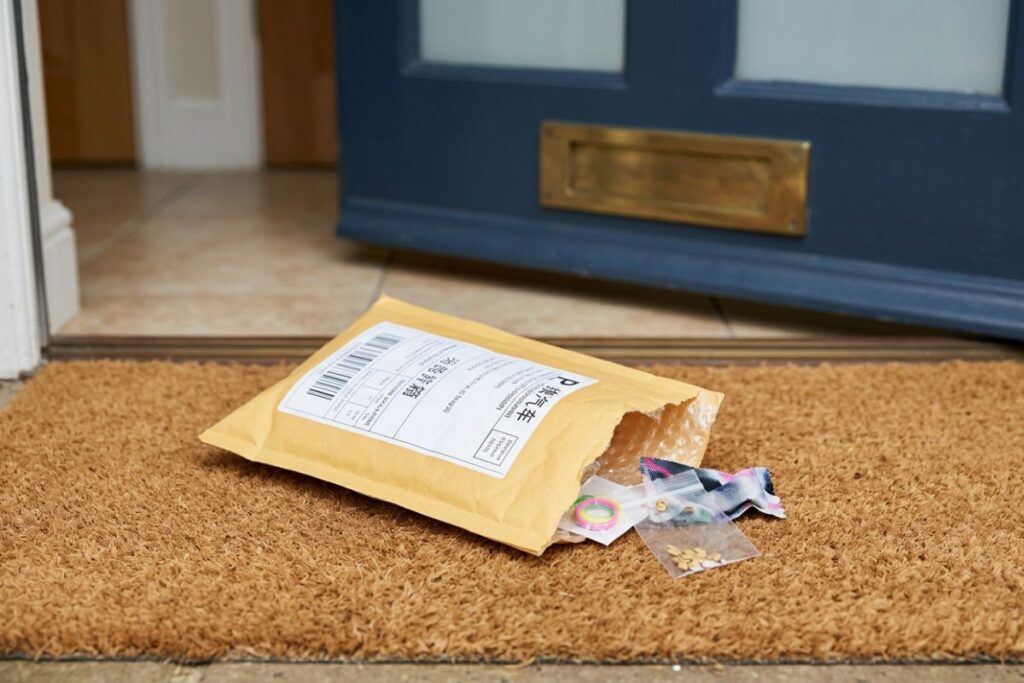
You’ve come home to find a small parcel through your letterbox that you definitely didn’t order.
Inside there’s something cheap and random – perhaps a piece of fabric, some plastic rings, a handful of seeds, or even a crumbling digestive biscuit.
There’s no invoice, no return address you recognise, and you’re left wondering what on earth is going on.
If this sounds familiar, you’ve almost certainly been the target of a brushing scam.
Don’t panic.
While it’s unsettling to receive unexpected parcels, a brushing scam is generally harmless to you personally.
This guide explains exactly what’s happening, why scammers do it, and what you should do next.
What is a Brushing Scam?
A brushing scam is a fraudulent tactic used by unscrupulous overseas sellers to artificially inflate their store ratings and boost their products in search results.
It’s called “brushing” because the scammers are essentially “brushing up” their sales figures and reviews with fake transactions.
These sellers typically operate on major e-commerce platforms like Amazon, AliExpress, eBay, Wish, and Temu.
The platforms use algorithms that favour sellers with high sales volumes and positive reviews, so these fraudsters have found a way to game the system – and unfortunately, your letterbox is part of their scheme.
The practice has become increasingly common in recent years, with thousands of UK consumers reporting unexpected parcels arriving from China and other overseas locations.
How Does a Brushing Scam Work?
Understanding the mechanics of a brushing scam helps explain why that random parcel turned up at your door.
Step 1: They Obtain Your Details
The scammer first needs a real name and address to make their fake purchase look legitimate.
They typically get this information from previous data breaches, by scraping publicly available information, or by purchasing lists of customer details from unscrupulous third-party sellers.
If you’ve ever bought something from a marketplace seller on Amazon or eBay, your details may have been sold on to brushing networks.
Step 2: They Create a Fake Account
Using your name and address, the scammer creates a fake buyer account on their chosen platform.
This account appears to be a real customer ready to make a genuine purchase.
Step 3: They “Buy” Their Own Product
The scammer then uses this fake account to purchase an item from their own store.
They pay for it themselves – they consider this a marketing expense.
Step 4: They Ship Something Cheap
Here’s where your mystery parcel comes in.
To complete the transaction and fool the platform’s verification systems, they need to actually ship something to a real address with a real tracking number.
Since shipping costs money, they send the cheapest, lightest item possible – often a scrap of fabric, cheap jewellery, random seeds, or small plastic items.
Step 5: They Write a Fake Review
Once the courier scans the package as delivered at your address, the platform registers a completed, verified sale.
The scammer can now write a glowing five-star review for their own product from the fake account they created in your name.
Because there’s a real delivery to back it up, the review appears legitimate and “verified” to other shoppers.
Step 6: Repeat
The scammer does this hundreds or thousands of times with different names and addresses, accumulating fake reviews that push their products higher in search results and make their store look trustworthy.
Why Do Sellers Run Brushing Scams?
The e-commerce world is fiercely competitive.
On platforms like Amazon, the difference between appearing on page one and page two of search results can mean the difference between thousands of sales and virtually none.
Platforms reward sellers who have high sales volumes, good ratings, and verified reviews.
A brushing scam artificially creates all three of these things, giving dishonest sellers an unfair advantage over legitimate businesses.
For the cost of shipping a few thousand cheap items, a scammer can build a store that appears reputable and trustworthy, allowing them to then sell overpriced or substandard products to real customers who are fooled by the fake reviews.
It’s essentially a form of advertising fraud that exploits both the platforms and consumers like you.
Should You Be Worried About a Brushing Scam?
The short answer is no – you are generally safe.
You Won’t Be Charged
The scammers pay for both the cheap item and the shipping costs themselves. They view this as an investment in their fake review operation.
You will not receive a bill, and no money will be taken from your accounts for the item you received.
Your Financial Details Are Probably Safe
In the vast majority of brushing scams, the fraudsters only have your name and postal address – information that’s often semi-public anyway.
They don’t have your bank details, credit card numbers, or login credentials.
Your address was most likely obtained from a data breach or sold by a third-party seller, not stolen through any sophisticated hacking of your personal accounts.
You’re Not Being Targeted Personally
This isn’t personal.
The scammers don’t know or care who you are – they just needed a real address in the UK to send their parcel to. Your name was simply one of thousands on a list.
What Should You Do If You’ve Received a Brushing Scam Parcel?
While a brushing scam isn’t dangerous, there are a few sensible steps you should take.
Keep or Bin the Item
You’re under no legal obligation to return unsolicited items. Under UK consumer law, if you receive something you didn’t order, you can keep it or throw it away – the choice is yours. Don’t feel guilty about binning that random piece of fabric.
Don’t Try to Return It
Even if there’s a return address, don’t waste your time or money trying to send it back.
The scammers don’t want it back, and you’d be paying for postage on something that isn’t your problem.
Change Your Passwords
As a precaution, it’s worth changing your passwords on any e-commerce platforms you use, particularly Amazon, eBay, AliExpress, and similar sites.
While the scammers probably don’t have your login details, your information was clearly floating around somewhere it shouldn’t have been.
Use strong, unique passwords for each platform, and enable two-factor authentication where available.
Monitor Your Bank Statements
While brushing scams rarely involve financial fraud, it’s always good practice to keep an eye on your bank and credit card statements for any unusual activity.
If your details were part of a data breach, it’s possible other information was compromised too.
Check for Fake Accounts
If you use Amazon, it’s worth checking whether anyone has created a fake account using your details.
Look at your Amazon account’s review history to see if any reviews have been posted that you didn’t write. If you find any, report them to Amazon immediately.
Report It (Optional)
You can report a brushing scam to Action Fraud, the UK’s national reporting centre for fraud and cybercrime.
Because you haven’t lost any money, they won’t investigate your individual case, but they’ll log it for intelligence purposes.
This data helps authorities understand the scale of the problem and potentially take action against organised brushing operations.
You can also report it to the platform involved – Amazon, eBay, and others have policies against fake reviews and may take action against the seller’s account.
How to Reduce Your Risk of Being Targeted by Brushing Scams
While you can’t completely eliminate the risk of being targeted, there are steps you can take to reduce the likelihood.
Be cautious about buying from unknown third-party sellers on marketplace platforms, as some sell customer data to brushing networks.
Check whether your email address has been involved in known data breaches using services like Have I Been Pwned.
Keep your e-commerce accounts secure with strong passwords and two-factor authentication. Be mindful of where you share your postal address online.
The Bigger Picture
While a brushing scam is more of a nuisance than a danger to you personally, it’s worth understanding that you’re seeing the visible tip of a larger fraud operation.
Fake reviews undermine trust in online shopping for everyone. They allow dishonest sellers to outcompete legitimate businesses, and they trick consumers into buying products that aren’t as good as they appear.
The cheap item in your mystery parcel represents a small cost to scammers who are making significant profits by deceiving shoppers.
By knowing how brushing scams work and by reporting them when you can, you’re helping to combat a form of fraud that affects the entire e-commerce ecosystem.