Court battles, forged signatures, a £20m Christmas loss, and the drivers being squeezed to cover it all — the untold story of what happened when Poland’s locker giant took over one of Britain’s most troubled couriers.
When InPost completed its £106 million acquisition of Yodel in April 2025, the pitch was compelling: merge Poland’s parcel locker darling with one of the UK’s biggest home delivery networks to create the country’s third-largest courier.
One year on, the reality looks very different.
A £20 million loss over Christmas. A court battle involving forged signatures. A software meltdown that stranded parcels for weeks. Corner shops cut loose at a week’s notice.
And drivers across the business telling us they’re being squeezed harder than ever — through rate cuts, route expansions, and a controversial new fines regime that one insider described to us as “a money-generating task to claw back losses.”
We’ve spent months speaking to drivers, monitoring court filings, and tracking InPost’s public statements. This is the story of what actually happened inside InPost’s first year at Yodel — and it bears little resemblance to the polished press releases.
Before we go any further, it’s worth understanding that InPost’s UK operation isn’t one simple business. There are two distinct sides to it.
The first is the locker network — staffed by van drivers who service InPost’s automated parcel machines and, increasingly, run combined routes with newspaper deliveries inherited from InPost’s acquisition of Menzies Distribution in October 2024.
The second is the home delivery arm — the old Yodel operation, staffed by a mix of couriers in cars and van drivers, some running multiple vehicles as small sub-contracted logistics businesses.
Both sides are self-employed. Both sides have been hit. But in different ways.
The Takeover — And a Legal Challenge Before the Dust Had Settled
InPost completed its acquisition of Judge Logistics Ltd — the company that owned Yodel — in April 2025, paying £106 million to create what it called the UK’s third-largest delivery company.
But the celebrations were short-lived. Almost immediately, Jacob Corlett — the 31-year-old logistics entrepreneur who had bought Yodel for £1 in January 2024 and then sold it for £1 just six months later when the company couldn’t pay its debts — launched a legal bid claiming he still owned a majority stake in the business through a set of mysterious “warrants.”
Corlett and his company, Shift Global Holdings, alleged that warrant documents gave them controlling interest in over 75% of Yodel’s share capital. His legal team argued that InPost knew about these claims before completing the acquisition but chose to ignore them.
InPost dismissed the claims as “grossly misleading” and designed to “cause market uncertainty around Yodel’s business and exert improper pressure on Yodel and InPost for an unwarranted financial settlement.”
What followed was months of legal wrangling that cast a shadow over every operational decision InPost tried to make. Corlett was ordered to pay £248,000 in legal costs, then asked to post £1.5 million in security.
The High Court acknowledged there was “a serious issue to be tried” but declined to freeze InPost’s ability to restructure the business in the meantime.
The case wouldn’t be resolved until December 2025 — nine months into InPost’s ownership. Nine months during which the fundamental question of who actually owned Yodel remained technically unanswered.
We’ll come back to how that ended. It’s worth the wait.
The Strategic Gamble: Lockers Over Doorsteps
While lawyers argued over ownership documents, InPost got to work reshaping Yodel’s business — and it quickly became clear that the home delivery operation wasn’t really what they’d paid £106 million for.
InPost wanted the infrastructure: the depots, the sorting facilities, the client relationships, and the route network. The endgame was to funnel as much volume as possible through their automated parcel locker model and reduce reliance on expensive doorstep delivery.
That meant making some ruthless calls. Clients who shipped parcels too large for lockers — companies like meal kit provider Gousto — were shown the door. If your product didn’t fit in a locker, InPost didn’t want your business.
On paper, the logic made sense: trim the unprofitable home delivery fat, pivot to the higher-margin locker model. In practice, you can’t just rip out a significant chunk of your parcel volume in the months before peak season without consequences.
As one driver put it to us: “We all know why. They charge too cheap for services. Yodel did it with SHEIN — the contract they took on with them, they were losing money on every parcel they delivered but at the time needed contracts. Gousto they had, charging peanuts, where if you go to DPD they were charging over £5 to deliver, we were something stupid like £2. They’ve still got multiple contracts going where they charge too little. They will never learn.”
Interestingly, many of those same clients have since come back. But they’re now paying surcharges for their larger parcel sizes.
So InPost alienated them, lost their volume during the most critical period of the year, and is now charging them more for the privilege of returning. Whether they stick around long-term remains to be seen.
The First ParcelShop Purge
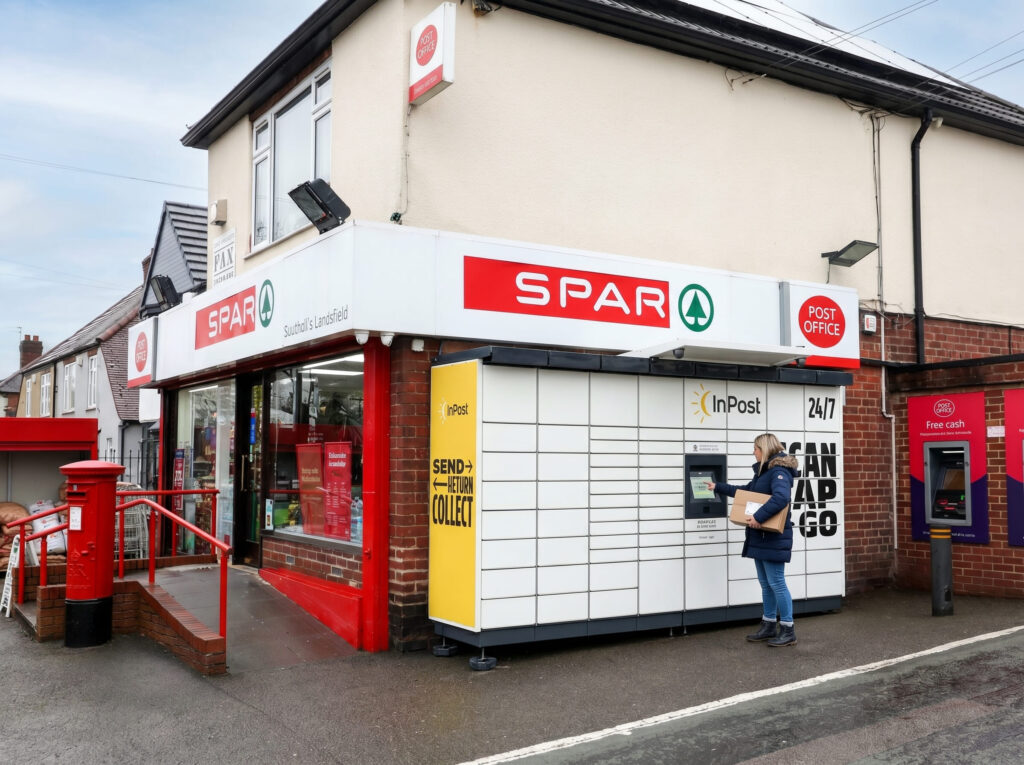
The locker-first strategy didn’t just affect big clients. By May 2025, InPost launched the first wave of cuts to its over-the-counter parcel shop network — the convenience stores and newsagents that handled parcel drop-offs and collections through PayPoint’s Collect+ service.
The pattern was simple and, once you saw it, impossible to unsee. InPost would partner with a local shop to offer parcel services, building up customer usage and footfall in that area. Then, once an automated locker was installed nearby, the shop would get a letter telling them the service was being withdrawn.
It happened again in January 2026, and on a bigger scale. Letters sent by PayPoint to Collect+ retailers around 14 January gave them less than a week’s notice that InPost and Yodel parcel services were being removed. Some stores stood to lose as much as £11,000 in annual profit.
One shop owner said they were such a busy store with high parcel volumes that the only explanation was the recent installation of InPost lockers across the road. Another was averaging 170 or more parcels a week and still got the chop.
InPost’s response was pure corporate: they were “constantly reviewing” their network in line with “dynamic capacity requirements and location fit” and “re-designing and optimising” for “greater long-term flexibility and efficiency.”
The translation is less elegant: these shops were used as placeholders. InPost leveraged them for coverage in areas where they hadn’t yet built out their locker infrastructure, built up a customer base, and then cut the shops out completely once a locker made them redundant.
For the corner shops that helped InPost establish itself in their communities, the reward was a letter with less than a week’s notice.
The Software Catastrophe — September 2025
Then came the incident that, more than anything else, exposed just how fragile the InPost-Yodel integration really was.
Around September 14th–15th, something went badly wrong with the software systems connecting the two networks. Parcels stopped moving. Tracking information showed packages repeatedly “departing” and “arriving” at the same sorting facilities in bizarre loops, without ever actually progressing towards their destinations.
The problems dragged on for over three weeks. Thousands of parcels sat stranded in sorting facilities with no clear indication of when they’d move. Vinted users were disproportionately hit — deeply ironic given that InPost’s locker network had been one of Vinted’s most celebrated delivery features.
One frustrated customer posted on X: “I have 12 parcels in Limbo. InPost and Yodel. Looks like any parcel sent at the time of the merge is stuck. 14th–15th ish. Anything posted last 3–4 days are moving normally.”
Another wrote: “I’ve got loads of parcels stuck in this delay too, have contacted both Vinted and InPost numerous ways and getting absolutely zero response from either… one of my parcels was posted a fortnight ago and has been in sorting office for 11 days.”
Perhaps the most telling comment came from a customer who captured what many were feeling: “I never thought I would ever say this, but Evri, forgive me for all the s**t I’ve ever said.” When your customers are apologising to Evri, you know things have gone seriously wrong.
InPost acknowledged the problems, blaming a “software integration issue that resulted in delays within part of our network.” They said engineers were “working around the clock” and that the backlog had “significantly decreased.” Customers saw little evidence of that.
The fact that parcels sent during the mid-September window remained stuck while more recently posted items moved normally suggested InPost may have simply moved on and left the backlog to sort itself out — or not.
A Disastrous Christmas
All of this — the shedded clients, the software chaos, the ongoing legal uncertainty — fed directly into what should have been InPost’s showcase quarter.
Q4 is everything in the delivery industry. It’s when volumes spike, margins are made, and a strong peak season can paper over a lot of cracks. InPost needed a good Christmas. They got the opposite.
The company’s UK arm posted an underlying loss of 99.3 million Polish zlotys — roughly £20.1 million — in Q4 2025. A year earlier, the same period had delivered earnings of 100.1 million zlotys (£20.3 million). That’s a swing of over £40 million in twelve months.
InPost said it had “capped parcel deliveries” over the busy quarter to focus on service levels “over short-term cost optimisation” and had paused restructuring of the UK division. Read between the lines: things were so fragile they didn’t trust their own network to handle full peak volume.
For the full year, UK underlying earnings halved to just £20 million. The damage dragged on the entire group, with Q4 earnings down 4% to a worse-than-expected £220 million, although annual group-wide earnings still lifted 12% to £830 million — a reminder that InPost’s Polish and European operations remain strong. It’s the UK that’s the problem.
Looking ahead, InPost offered no comfort.
The company forecast flat underlying earnings for 2026, explicitly citing “lower expected profitability in Poland and the increasing share of the UK in total group results.”
The UK operation — the one that was supposed to be the growth engine — was now being openly flagged as a drag on the business.
The Court Battle Ends — With a Bombshell
Remember that legal dispute we said was worth waiting for? In December 2025, the High Court finally delivered its verdict on Jacob Corlett’s ownership claims — and it was devastating.
Mr Justice Fancourt concluded that Corlett had probably forged his own mother’s initials on the warrant documents he claimed gave him controlling interest in Yodel.
The signatures, supposedly written during a breakfast meeting at Corlett’s Liverpool flat two days before JLL’s takeover, were written using three different pens according to forensic handwriting analysis.
Corlett’s mother, Tamara Gregory, testified that she had signed the documents herself but had written a “scrappy” signature because she was pushed for time and upset. The judge wasn’t convinced, ruling that her evidence was “an attempt by a loving mother to help her son, who was in a very difficult position of his own making.”
The judge also found that Corlett had “not given a moment’s thought” to how trade creditors, landlords and HMRC would have their debts repaid, and that his attempt to regain control would have prevented the company from receiving rescue funding.
Michael Rouse, InPost’s international CEO, called it “an extraordinary judgment that demonstrates the lengths Corlett was prepared to go in order to extract money from Yodel.” The company said it was considering further legal action.
Nine months of uncertainty, hundreds of thousands in legal costs, and it ended with a finding of probable forgery.
For InPost, it was vindication. But it was vindication that came far too late to undo the damage that nine months of contested ownership had inflicted on operational planning, client confidence, and integration timelines.
The Drivers Are Paying the Price
If the financial results tell one story, the people actually driving the vans and delivering the parcels tell another.
Over the past several months, we’ve heard from drivers across both sides of InPost’s UK business.
Their accounts paint a picture of a company that is systematically squeezing its workforce to offset the mounting losses from a troubled takeover.
Pay cuts started not long after InPost took over Yodel last April, and they haven’t stopped since. Both sides of the business — locker drivers and home delivery couriers — saw rates cut again in January 2026, and as of this month, there are persistent rumours of yet another round.
The specifics vary depending on which part of the operation you sit in and how your contract is structured, but the direction of travel is the same everywhere: less money for the same or more work.
The Locker Drivers
The drivers who service InPost’s automated parcel machines have traditionally been the better-treated side of the operation. Before the Yodel acquisition, many described it as a good job with a decent company. That’s changed.
Locker drivers are paid a flat daily rate regardless of how many parcels they handle. That day rate was cut in January 2026 — while at the same time, routes were expanded to cover more ground. The result: more work for less money.
Drivers tell us they’re now delivering between 600 and 700 parcels a day to lockers and collecting anywhere between 800 and 1,000, with many earning less than 17p per parcel once you divide the day rate by the actual volume they’re shifting.
One locker driver contacted us about being forced to work on New Year’s Day 2026, starting at 6:30am to empty lockers:
“InPost are having their couriers in working on 1st Jan with a start time of 6.30am to collect from lockers. I’ve worked for every parcel company and not one has had drivers working 1st January. They are using the fact lockers will be full and need emptied, but the same lockers can go two days without being collected from at Christmas but not one day at New Year. As the drivers are self-employed they have been threatened with losing their routes if they don’t work on the 1st Jan.”
The follow-up was even more damning: “We ended up working on the 1st and only did collections that didn’t get processed and sent away until the 2nd. Again, pointless, as they could have been collected on the 2nd and still processed on the 2nd as usual.”
It wasn’t just New Year’s Day. At the Bellshill depot, nine locker runs were cut just three days before Christmas, with the remaining drivers expected to absorb the extra work.
When it proved unmanageable, three runs were temporarily reinstated — but one has since been cut again. Drivers report being told their runs are changing with less than 24 hours’ notice to cover gaps left by the cuts, and that more lockers are being added to existing routes without any increase in pay.
When drivers at the depot raised the issue of fuel supplements to help with rising costs due to the Iranian conflict, they were told it wasn’t something the company was looking at.
When they asked about a pay review, they were told payments were being “looked at” but wouldn’t be increased. As one driver put it to us, that probably means another cut is coming.
Then there’s the Menzies experiment.
When InPost completed its acquisition of Menzies Distribution in October 2024 — paying £60.4 million for the remaining 70% stake — it gained control of one of the UK’s largest newspaper and magazine distribution networks, delivering to over 25,000 retailers every day.
The idea was to leverage those existing daily routes to service parcel lockers at the same stops. Same vans, same drivers, significantly lower cost per parcel.
That integration is now being tested on the ground — and it’s not going well. Some depots are trialling the merger of locker servicing onto newspaper delivery runs, offering drivers less money for a combined locker-and-shop route.
Drivers have been told to either accept the new terms or move onto the home delivery side of the business — the old Yodel operation. Several drivers have already quit. Others are threatening to follow.
As one driver put it: “What was once a great job and company to work for has quickly changed and gone downhill. Will probably only get worse once the takeover happens.”
The takeover he’s referring to isn’t the Yodel deal. It’s what’s coming next. More on that shortly.
The Home Delivery Drivers
On the Yodel side of the business, the picture is more mixed — though the trend is still heading in the wrong direction.
The home delivery operation is more complex than the locker side. There’s a mix of couriers in their own cars — often packed to the brim — van drivers, and some operators running multiple vehicles as small sub-contracted logistics businesses.
The rate structures vary across these groups, but the January 2026 cuts hit the home delivery arm hard, and with post-Christmas volumes falling off a cliff at the same time, drivers were left earning less on fewer parcels.
It’s a new fines regime, though, that has really set the home delivery network alight.
InPost has introduced what it calls “compliance photo” charges — deductions from driver pay for delivery photos that don’t meet the company’s standards.
On top of that, drivers are now being fined for customer complaints and for breaching delivery time windows. All of this is new in 2026.
One business owner/driver — who runs several vans on behalf of Yodel — told us the impact has been devastating:
“InPost and Yodel are charging drivers for non-compliant photos. There’s a bit of a purge going on and some service providers (SPs) are being charged hundreds of pounds a week, with something called ‘fair deduction.’ I personally had £500 in one week deducted. I’ve personally been told this is a money generating task, to claw back losses over the year.”
He added: “As well as photos, we get fined for customer complaints, breaching delivery times. They’ve cut everyone’s rates, which is bonkers as the volume has dropped off. I have a number of vans and drivers and I am really struggling to even break even.”
The same driver pointed to a deeper structural problem: “There are Yodel top brass still employed making the same silly decisions that got Yodel in a mess in the first place.”
What’s particularly galling for drivers is that Yodel tried implementing a similar photo fines scheme about a year ago — and pulled it within weeks.
Whether that was because of pushback from drivers or legal uncertainty around deducting rightfully earned pay from self-employed contractors, nobody we spoke to was entirely sure. But it’s back now, and being enforced aggressively.
The photos in question are, according to drivers we’ve spoken to, mostly compliant — and the whole compliance push wasn’t a significant feature of the business before 2026.
It has the feel of a company that has found a new lever to pull when it needs to claw back money, and is pulling it hard.
That said, the experience across the home delivery network isn’t uniformly bleak.
One car courier in the southwest, who has been with Yodel since 2023, told us he’s never been charged for a non-compliant photo or received a fine for a customer complaint — and hadn’t even been aware that it was happening.
He also spoke positively about the flat-rate pay structure, contrasting it favourably with the parcel banding systems used by competitors like Evri, where earnings fluctuate depending on parcel size. “Hugely welcome a flat rate,” he told us. No size bandings, no complicated calculations — just a predictable day’s pay.
But even his account revealed something telling about the direction of travel. Since February 2026, the employed Yodel staff who used to deliver his daily sacks of parcels have been replaced by a third-party contractor — a Devon-based company covering Cornwall and Devon that primarily services lockers but picks up extra work delivering sacks to home couriers like him.
He had no complaints about the service itself, but the shift is significant: it’s another layer of outsourcing in a business that already relies almost entirely on self-employed contractors, and another sign that InPost is stripping out directly employed roles wherever it can.
The same courier also told us that during a quiet period last summer, he was told there’d be no work for four weeks. Those four weeks quickly became seven.
The Gap Between the Press Releases and the Ground
Throughout all of this — the legal chaos, the software meltdown, the £20 million Christmas loss, the rate cuts and fines — InPost’s public-facing communications have told a remarkably different story.
Record parcel volumes of 262.1 million in the UK. Surveys claiming widespread locker adoption. PR campaigns about “parcel anxiety gripping the nation”. Plans to more than double the UK locker network from 14,000 to 30,000 points.
None of it is technically untrue. InPost’s locker network does work well in many urban areas. Volumes are growing — boosted significantly by the Yodel acquisition, adding conventional parcel numbers to the tally. The technology, when it works, is genuinely convenient.
But volume and revenue are not the same thing as a functioning, sustainable business. You can deliver record numbers of parcels and still lose £20 million in a quarter. You can double your locker points and still have drivers who can’t break even. You can publish glossy surveys about consumer preferences and still have a workforce that’s being bled dry to cover your losses.
And those surveys? Based on InPost’s own commissioned research. Not exactly the most impartial source when you’re trying to convince the market that your model is the future. In the gritty underbelly of the actual operation, things look very different.
InPost conquered Poland. Their model works brilliantly in a country where the locker concept caught on early and the infrastructure was built from scratch.
But the UK is a different market — more geographically spread out, with an entrenched home delivery culture and a battered courier workforce that’s been squeezed by one company after another for years.
Bolting a locker-first strategy onto a troubled home delivery network in the middle of a legal dispute, with a rushed software integration and a series of rate cuts, was always going to be messy.
What Comes Next: FedEx, Advent, and the £6.8 Billion Question
In February 2026, InPost agreed to be taken private by a consortium led by delivery giant FedEx and private equity firm Advent International for €7.8 billion (£6.8 billion).
The deal, expected to complete in the second half of 2026, will see FedEx and Advent each take 37% ownership, with InPost founder Rafał Brzoska’s investment firm A&R holding 16% and Czech investment company PPF retaining 10%.
InPost will continue as a standalone brand with its Polish headquarters, and Brzoska will remain as CEO. FedEx gets access to InPost’s last-mile locker network across Europe. InPost gets FedEx’s global logistics backbone and, critically, freedom from the scrutiny of public markets.
The firms said the deal would allow InPost “to operate more efficiently” while cutting costs associated with being listed and removing “dependency on market expectations driven by short-term performance outlook and periodic reporting.”
In other words: once the deal closes, InPost won’t have to publish quarterly results showing UK losses. Less scrutiny, more room to restructure aggressively.
For drivers and small businesses caught in the middle of all this, the Advent name in particular will ring alarm bells.
Advent International is no stranger to the UK courier industry. They are the former owners of Hermes, now rebranded as Evri — a company that became synonymous with poor service and driver exploitation during Advent’s tenure.
The private equity playbook is well established: acquire, strip out costs, boost margins, sell at a profit. That Advent is now co-owning the company that absorbed Yodel — itself already a byword for service issues — will give nobody on the ground any comfort whatsoever.
The driver who told us things would “probably only get worse once the takeover happens” wasn’t speculating wildly. He was basing his assumptions on previous events.
One Year On
Twelve months ago, InPost bought Yodel and promised to build something transformative. What they’ve built instead is a case study in how not to integrate an acquisition.
A legal battle that consumed nine months and ended with a finding of probable forgery. A software integration that stranded parcels for weeks. A strategic pivot that shed clients just before peak season. A Christmas quarter that delivered a £20 million loss. A parcel shop network used as scaffolding and then torn down. A workforce squeezed through rate cuts, route expansions, and a controversial new fines regime.
And now, a private equity-backed takeover that promises more of the same — only with less public accountability.
InPost’s locker technology is good. Their ambition to reshape UK delivery habits is genuine. But ambition without execution is just marketing — and right now, the gap between what InPost says and what InPost does has never been wider.
Year two starts now. The drivers, the shop owners, and the customers who’ve been caught in the crossfire will be watching closely.
So will we.
Key Timeline: InPost’s First Year at Yodel
Oct 2024 — InPost completes acquisition of Menzies Distribution (£60.4m for remaining 70% stake), gaining control of the Newstrade and Express logistics networks.
Apr 2025 — InPost acquires Yodel (Judge Logistics Ltd) for £106m. Jacob Corlett immediately launches legal challenge over ownership.
May 2025 — First wave of ParcelShop network cuts.
Sep 2025 — Software integration disaster. Parcels stuck in sorting facilities for 3+ weeks.
Oct 2025 — High Court ownership trial begins. Bulky-parcel clients begin to be shed from the network to ensure a “stable” peak period.
Q4 2025 — Parcel deliveries capped during peak season. UK arm posts £20.1m quarterly loss.
Dec 2025 — High Court rules Corlett likely forged his mother’s signatures. Ownership dispute resolved after nine months.
Jan 2026 — Rate cuts hit both sides of the business. Drivers forced to work New Year’s Day. Second ParcelShop purge. Compliance photo fines introduced for home delivery service providers. Combined locker/newspaper routes trialled at some depots at lower pay.
Feb 2026 — FedEx/Advent-led consortium agrees £6.8bn deal to take InPost private. Employed Yodel staff in some regions replaced by third-party contractors.
Mar 2026 — InPost reports flat 2026 growth forecast, citing UK drag on earnings. Shedded clients returning — but paying surcharges.
Apr 2026 — Rumours of further rate cuts.