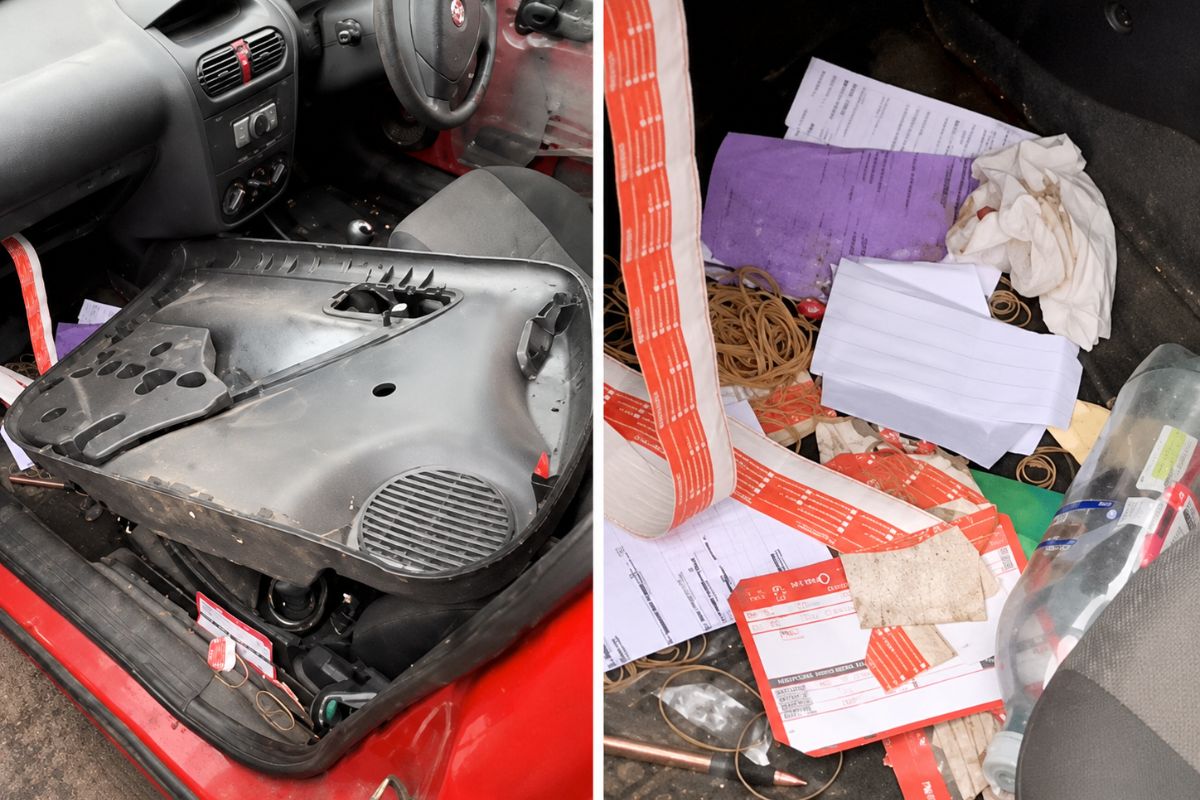
MPs put three direct questions to Royal Mail about the state of NHS letter delivery in the UK.
How many complaints has the company received about late or missing NHS post? How many NHS organisations have actually signed up to the barcode system that was supposed to fix the problem? And will that system ever be extended to other types of important mail?
Royal Mail answered all three. The responses, provided in official correspondence to parliamentarians, confirm what patient groups have been saying for years but have never had the company’s own numbers to back up.
The complaint figures are bad. The adoption numbers raise serious questions about how far the supposed fix actually reaches. And the answer on extending the barcode to anything beyond the NHS tells you everything you need to know about the state of the network.
Here is what Royal Mail told MPs, what the figures actually mean, and why the barcode that was sold as the solution may be more of a sticking plaster than anyone in charge wants to admit.
How Many Complaints Has Royal Mail Received About NHS Letters?
In the 2025/26 financial year, Royal Mail received around 23,800 complaints relating to delayed or undelivered NHS letters.
It is worth sitting with that number for a moment, because the timeline matters.
The NHS barcode system, the very mechanism Royal Mail developed alongside NHS leaders and patient groups to tackle this exact problem, launched in July 2025.
That means the vast majority of those 23,800 complaints were logged after the fix was already live and operational.
Royal Mail did not attempt to dress the figure up. In its response to MPs, the company acknowledged that the number “is not good enough” and that it owes customers “a more reliable service.”
That is a fairly striking admission from an organisation that spent much of 2025 publicly championing the barcode as the answer.
And 23,800 only accounts for people who actually went through the process of making a formal complaint.
Anyone who has tried to complain about a missing letter knows that most people simply do not bother. They phone the hospital, NHS service provider, or GP surgery, try to rebook the appointment, and get on with their day.
The true scale of NHS letters arriving late, arriving after the appointment date, or never arriving at all is almost certainly far higher than the complaints data suggests.
What Are Patient Groups and the NHS Saying?
This is not just a Royal Mail problem. The patient bodies and NHS organisations that co-signed the barcode initiative have been raising alarm bells about NHS letter failures for years.
Healthwatch England has cited research showing that one in five people received an invitation to an appointment by letter or text after the date of the appointment had already passed. Think about that for a second. That’s 20% of all appointments.
The Patients Association has warned that delayed NHS post creates genuine patient safety risks.
Rachel Power, the organisation’s Chief Executive, said that when information flows properly between patients and healthcare providers, it creates the foundation for shared decision-making and safer care.
When it does not, patients are left chasing their own healthcare information rather than receiving it when they need it.
Around 8 million outpatient appointments go unattended each year, according to NHS England data, representing 5.4% of all appointments.
Nobody is claiming that all of those are caused by postal failures.
But when letters containing appointment dates, test results and treatment plans are arriving late or not at all, it is not difficult to see how the postal service plays its part in a problem that costs the NHS hundreds of millions every year and disrupts care for everyone else on the waiting list.
The latest appointment statistics also show that patients did not attend 16 million GP appointments in 2025, a figure NHS England highlighted in March 2026 as part of a campaign urging patients to manage appointments through the NHS App.
The scale of missed appointments across the health service is staggering, and anything that contributes to it, including unreliable post, deserves serious scrutiny.
What Is the Royal Mail NHS Barcode and How Does It Work?
All mail handled by Royal Mail already carries a Mailmark barcode.
That is not new.
What the NHS system introduces is a specific class identifier within that existing barcode framework, one that tells Royal Mail’s sorting machines that a particular item is NHS correspondence.
The concept is straightforward.
NHS organisations, or the printers and fulfilment houses that handle their post, can opt in to the NHS class identifier. When that identifier is present in the Mailmark barcode, the network can recognise the item as NHS mail.
The important part is what happens when things go wrong.
Where Royal Mail’s own internal reporting shows that delivery standards are not being met, whether at a national or local level, the system allows NHS letters to be automatically extracted from the sorting machines and handled separately through to delivery.
In plain terms, when the network is struggling, NHS post gets pulled out and prioritised rather than sitting in the same backlog as everything else.
The technical framework for this was formalised in April 2025 through Amendment Notice 081 to Royal Mail’s Access Letters User Guide, a few months before the barcode formally launched in July.
The notice, signed by Tim Cable, Wholesale Products Director at Royal Mail, set out the mechanics in detail.
Mailers using the NHS class identifier must register with Royal Mail by emailing a completed registration form that includes their Supply Chain ID, details about the type of NHS mail they are posting (appointment letters, test results and so on), and supporting evidence that they are genuinely producing mail on behalf of the NHS.
Royal Mail then confirms eligibility in writing before the organisation can start posting with the identifier.
The service is free. There is no additional cost to NHS organisations for using it.
That was a deliberate decision, and one that Royal Mail and its partners highlighted prominently when the system was announced.
How Many NHS Organisations Have Actually Signed Up?
This is where the picture gets murkier, and where Royal Mail’s response to MPs was most revealing.
The company told parliamentarians that more than 350 NHS providers have registered for the barcode. But it was upfront about why it cannot provide a more precise figure.
The NHS does not take a standardised approach to posting letters.
Some organisations use Royal Mail directly. Others use intermediaries: printers, fulfilment houses, access operators.
In many cases, those intermediaries own the commercial relationship with the NHS provider and have not shared their customer lists with Royal Mail.
So Royal Mail knows who has registered directly, but it does not know the full extent of NHS organisations whose post is being barcoded through third parties.
The actual number of providers benefiting from the system is, in Royal Mail’s own words, likely to be higher than 350. But “likely higher” is not the same as having a clear picture.
What the company can measure is volume.
Between December and February alone, 20.8 million NHS barcoded items were handled through the network. That is not a trivial number, and it suggests that where the barcode has been adopted, it is being used at real scale.
But here is the tension the figures lay bare. Twenty million barcoded items flowing through the system in three months, 350-plus registered providers, and still 23,800 complaints about delayed or undelivered NHS letters in a single financial year.
The barcode is clearly doing something. Whether it is doing enough is a different question.
The Political and Regulatory Backdrop
The barcode arrived at a moment when the future shape of the UK’s entire postal service was being actively reshaped.
Following a detailed consultation process, Ofcom confirmed significant changes to the Universal Postal Service.
Under the reforms, Royal Mail continues to provide a six-day-a-week service for First Class letters, but Second Class letters are now delivered over three days instead of six. Parcels remain unaffected. These changes came into legal effect from 28 July 2025, with new quality targets enforced from 1 April 2026.
The reliability of NHS letter delivery became one of the most politically sensitive pressure points during that consultation.
In April 2025, a joint open letter to Ofcom was signed by a coalition that would have been difficult to imagine a few years earlier: Royal Mail’s Chief Executive Emma Gilthorpe alongside Chris Hopson from NHS England, Saffron Cordery from NHS Providers, Louise Ansari from Healthwatch England, Jacob Lant from National Voices and Rachel Power from the Patients Association.
The letter set out how the group had been working together to ensure that any changes to the universal service would not lead to worse outcomes for patients.
The barcode was the centrepiece of that message. The signal to Ofcom was clear: we know there is a problem, we are fixing it together, and any reform needs to protect NHS mail.
Royal Mail went further, writing directly to the Secretary of State for Health and Social Care, their counterparts in the devolved nations, and all Members of Parliament to raise awareness of the barcode and push for wider adoption.
That is an unusual level of political engagement for what is, on paper, a technical change to a class identifier in a mail sorting system.
It tells you how seriously the issue was being taken at the top of the organisation, and how much reputational risk Royal Mail saw in getting it wrong.
The new quality targets are now live as of April 2026, meaning Royal Mail’s performance on letter delivery will be measured against stricter benchmarks going forward.
In each year since 2023, Royal Mail has been fined by Ofcom over delivery delays, amounting to nearly £40 million. Recent reports suggest that an average of roughly one in four first-class letters arrives late, with 219 million letters potentially arriving late this year.
Against that backdrop, the 23,800 NHS letter complaints are not an isolated data point. They are part of a much wider pattern of delivery failures that Ofcom, MPs, and the public are watching closely.
Why Royal Mail Will Not Extend the Barcode to Other Types of Post
Perhaps the most telling part of Royal Mail’s response to MPs was not about what the barcode does, but about what it will never do.
When asked whether a similar system could be extended to other categories of important correspondence, Royal Mail said no.
The reasoning was blunt. Expanding the extraction process to include additional mail types, the company said, “would dilute our ability to prioritise NHS mail effectively.”
That single sentence contains an uncomfortable truth about the state of the network.
The barcode works precisely because it applies to a defined, limited category of mail.
If Royal Mail started applying the same logic to council tax reminders, court summons, benefit notifications, speeding fines, insurance renewals and every other letter that carries real consequences for the person waiting on it, the extraction process would collapse under its own weight.
You cannot pull everything out of the system and call it prioritisation. If everything is urgent, nothing is.
But the question of where you draw that line is genuinely difficult.
A missed NHS appointment is serious. So is a missed court date. So is a benefit sanction triggered by a letter that arrived three days late. So is a council tax summons that lands on the doormat a week after the deadline has passed.
Constituents have contacted their MPs to say they have missed court documents and NHS letters — important things they need in order to get on with their lives.
Royal Mail has decided that NHS mail sits above everything else, and the logic for that is sound.
But it leaves every other category of important post relying on a standard service that, by the company’s own admission, is not consistently meeting its delivery targets.
The barcode is not a fix for the network. It is a workaround for one specific type of mail within a network that is struggling to deliver reliably across the board.
Where Does This Leave Things?
23,800 complaints in a single year. More than 350 registered providers, but no clear picture of total adoption. 20.8 million barcoded items in three months, and still the complaints keep coming.
The barcode is a step in the right direction. Nobody serious is arguing otherwise.
But it was introduced to solve a problem that clearly has not been solved, and Royal Mail has now confirmed in writing that the same approach will not be extended to any other type of mail, no matter how important.
The system exists because the standard service cannot be relied upon to deliver NHS letters on time.
The question that Royal Mail, Ofcom, and the government will all have to answer eventually is what happens to everything else.