DPD told its self-employed drivers it was stepping in to help with rising fuel costs via a fuel supplement,.
The message landed in driver inboxes with the kind of language you would expect from a company looking after its partners.
“We know that sudden spikes at the pump directly impact your business, so DPD is stepping in to support our partners through this period of volatility.”
“We want to ensure that your costs remain manageable even when the global market is unpredictable.”
The headline figure was a reduction of 6.19p per litre, applied as a supplement and paid a week in arrears.
On paper, it sounds like the company is doing the right thing.
Then the actual payments started landing.
What Drivers Are Actually Being Paid
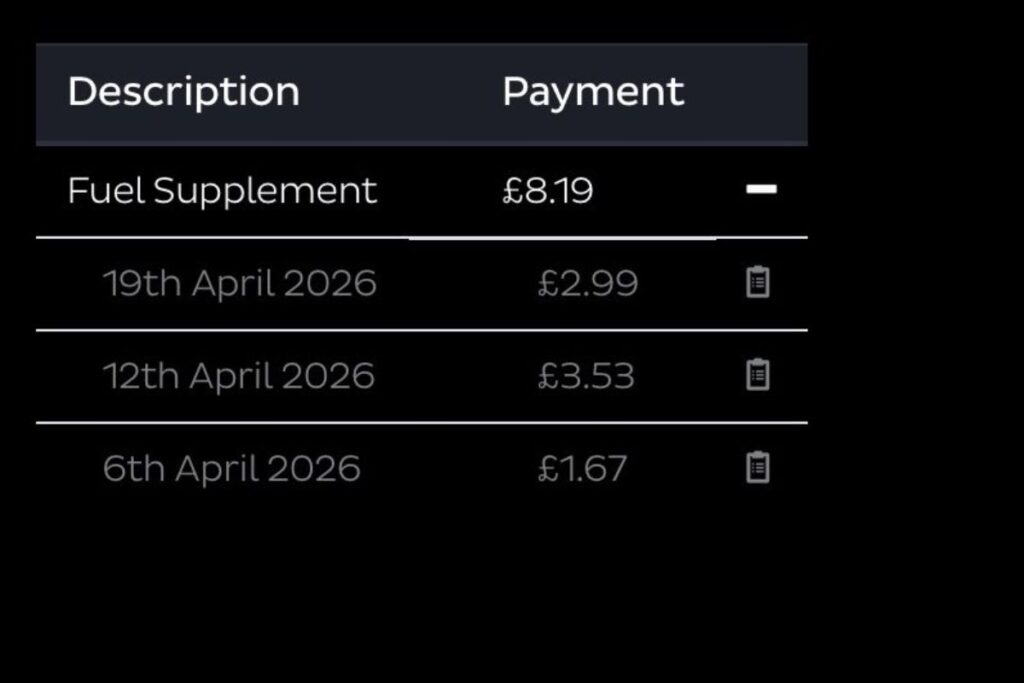
A DPD driver shared their fuel supplement payments with us this week.
Three weeks of “support” came to a grand total of £8.19.
The breakdown was as follows.
£1.67 for the week of 6th April 2026.
£3.53 for the week of 12th April 2026.
£2.99 for the week of 19th April 2026.
That is the entire fuel supplement, across three weeks, for a self-employed driver covering real miles in a real van.
The Mileage Behind the Numbers
We asked the driver what kind of distance they were actually covering.
The answer was 50 to 60 miles a day, five days a week.
That is roughly 250 to 300 miles a week before you factor in any heavier rounds.
The Real Cost of Fuel
Diesel is currently sitting at around £1.89 to £1.91 per litre across most of the UK, with some forecourts in more expensive areas pushing closer to £2 per litre.
Run the numbers on a delivery van doing 300 miles a week.
A typical diesel courier van returns somewhere in the region of 35 miles to the gallon when loaded and stopping every few minutes.
300 miles divided by 35 mpg works out at roughly 8.6 gallons, or around 39 litres a week.
At £1.89 per litre, that driver is spending £73.71 a week on fuel.
At £1.91 per litre, £74.49.
At £2 per litre in the worst-priced areas, just under £78.
For three weeks of work, that is somewhere between £220 and £234 spent at the pumps.
DPD’s contribution to that bill was £8.19.
That is roughly 3.5% of the driver’s fuel outlay.
The first weekly payment of £1.67 does not even cover a single litre of diesel.
How Evri Compares
DPD is not the only courier running a fuel support scheme right now.
Evri has just activated its own “fuel top up” payment, triggered after the government’s published diesel price exceeded £1.70 per litre for more than three consecutive weeks.
The payment kicked in from Monday 20th April for eligible couriers and stays in place until diesel falls below £1.70 per litre for three consecutive weeks.
Here is what Evri is actually paying.
Urban couriers receive £0.50 per day.
Super Urban couriers receive £0.35 per day.
Super Rural couriers receive £0.75 per day.
Across a five day week, that works out at £2.50, £1.75 and £3.75 respectively.
For a Super Urban courier, that is a fuel top up of £1.75 against a fuel bill that could easily run past £70.
There is another catch.
The Evri top up is tied to performance metrics.
Couriers who miss targets on any given day, often for reasons outside their direct control such as missed parcels in depot, address issues, or system problems, can lose the top up for that day entirely.
A driver could quite easily end the week with a fuel “top up” of less than a pound.
What the Customer Is Being Charged
Here is the part that makes the figures harder to swallow.
DPD is currently charging its business customers a 19% fuel surcharge on top of standard rates.
That surcharge is applied across the board, week in, week out, to recover the cost of running the network.
The drivers running that network, in their own vans, paying for their own fuel, are receiving sums that round to pocket change.
The money is being collected from the customer. It is just not reaching the people burning the diesel.
The Self-Employed Squeeze
DPD and Evri drivers are self-employed.
That means every litre of fuel, every tyre, every service, every insurance renewal comes out of their own pocket.
When fuel prices spike, there is no salaried buffer absorbing the hit. The driver wears it.
A genuine fuel support scheme would meaningfully offset that pressure.
A £1.67 weekly payment from DPD does not.
A 35p daily payment from Evri, conditional on hitting performance metrics, does not either.
These are not support schemes in any practical sense. They are line items that allow each company to say it has a fuel support scheme in place.
Why This Matters
DPD and Evri together handle a huge slice of UK parcel volume, and the people doing the driving are absorbing fuel volatility on payments that do not cover a single litre in some cases.
If you are a self-employed courier doing 300 miles a week, your fuel bill has gone up by tens of pounds. Your “support” has gone up by pennies.
Both companies have told their drivers they are stepping in to help.
The payslips tell a different story.