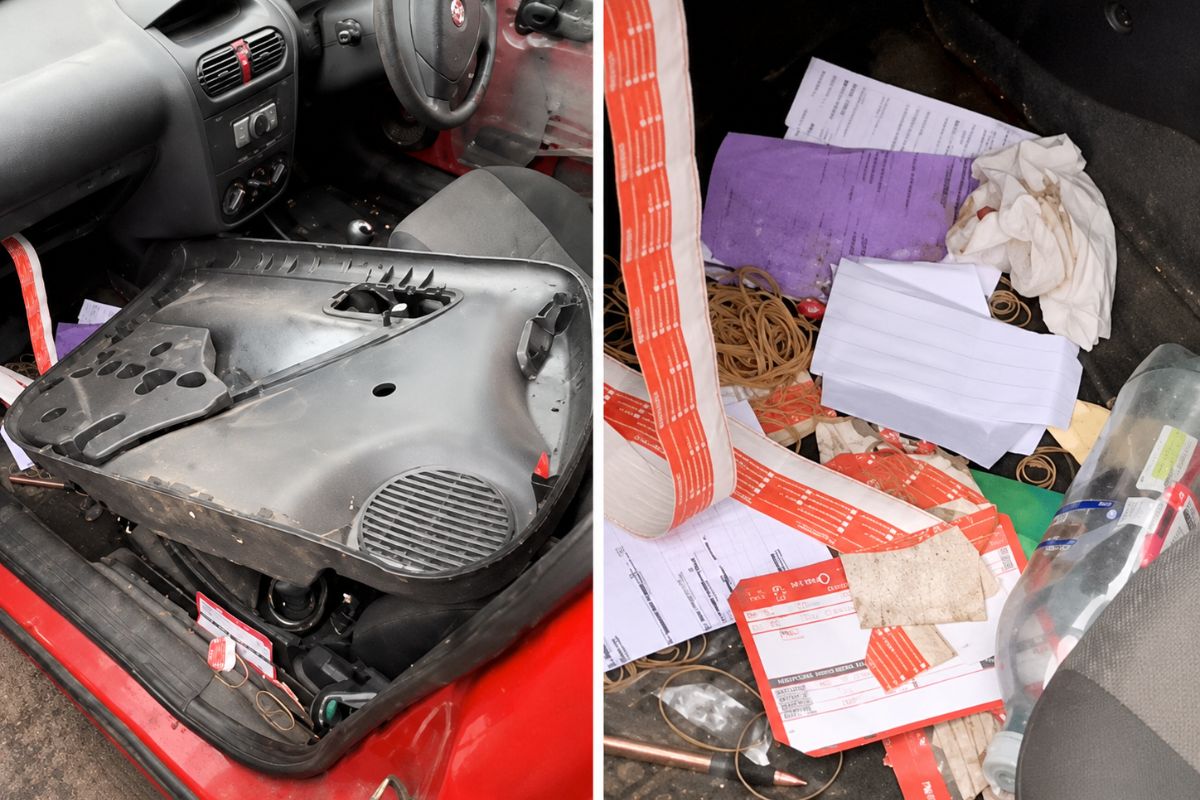
The Amazon Sproughton depot near Ipswich has been quietly running one of the most troubling operations in UK last-mile delivery for nearly two years.
It took a local newspaper investigation, a grounded fleet, a forced-out whistleblower, and eight months of fallout before anything changed.
On 24th April, Amazon terminated its contract with BEAZ Logistics, the Delivery Service Provider that operated out of the Amazon Sproughton depot and handled a significant share of parcel deliveries across Suffolk.
Amazon insists the decision had nothing to do with the investigation that preceded it.
The drivers who lived through it say otherwise.
What the Amazon Sproughton Depot Investigation Uncovered
The story broke in the summer of 2025, when the East Anglian Daily Times published an investigation based on the accounts of six current and former drivers working out of Amazon’s Ipswich and Norwich sites.
What they described bore almost no resemblance to the professional, safety-first operation Amazon describes in its own communications.
Drivers spoke about delivery targets running up to 350 stops in a single day.
They spoke about shifts officially classed as nine hours that regularly stretched past midnight.
One former driver at a separate DSP, TK Prime Limited, said he routinely started at 7.30am and finished close to the following day.
They described feeling like “slaves driving non-stop,” without the time or facilities to stop for the toilet.
Urine Bottles Piling Up Outside the Warehouse
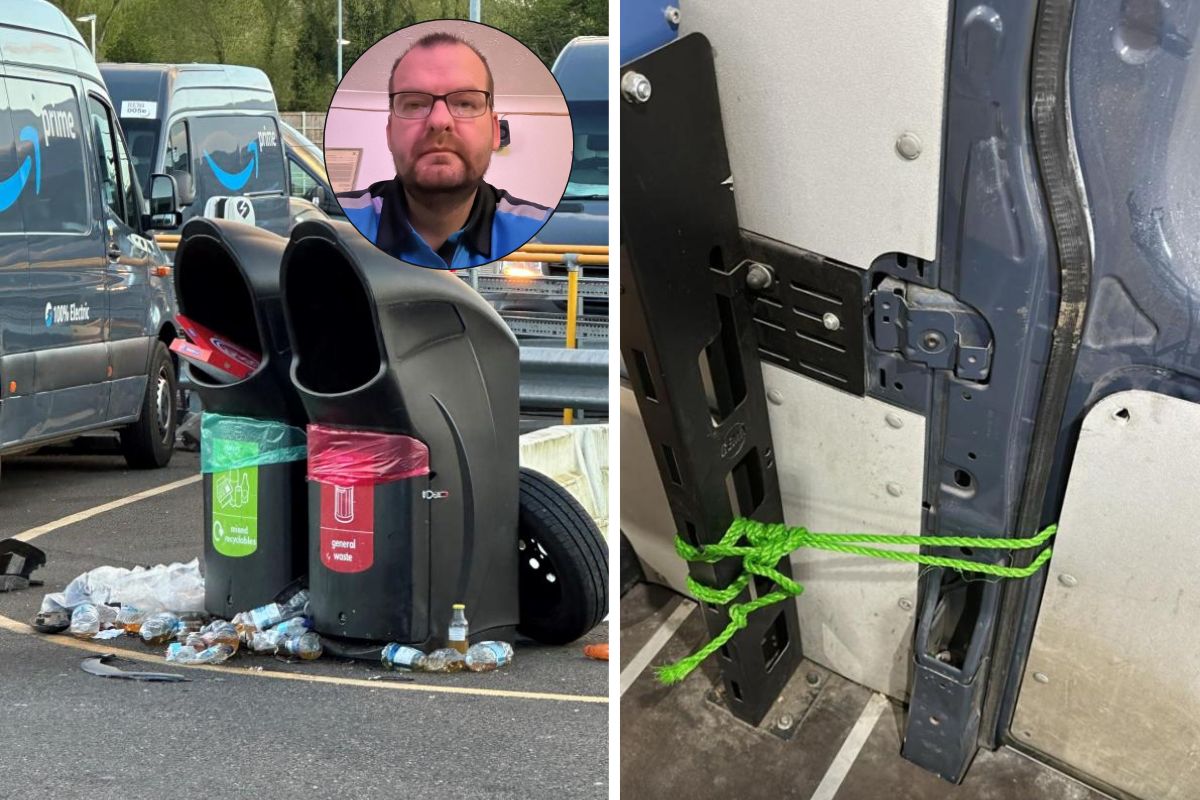
The most visceral image from the investigation was a photograph of urine bottles stacked up outside the Amazon Sproughton depot.
Sources told the paper the pile had formed after the nearby bin became too full to contain them.
For Matthew Cole, a driver who had been with BEAZ Logistics since April 2024, the sight no longer surprised him.
There was never, he said, “adequate facilities or time to stop.”
Vans Held Together With Rope
The second image that made the rounds was a van door held shut with a piece of rope.
The driver had reported the fault.
He was told to ignore it and finish the shift.
Other vehicles across the fleet had engine warning lights on, faulty brake pads, barely any tread on the tyres, and seatbelts damaged to the point that drivers simply stopped wearing them.
One driver reported being left with a headache after exhaust fumes leaked into the cabin.
Another was rear-ended by a lorry on the A14, shaken up, and told to get back in a replacement van and carry on with the route.
That driver was Matthew Cole.
The Culture of Mistrust
The drivers who spoke to the East Anglian Daily Times described a working environment where raising concerns was punished rather than welcomed.
BEAZ Logistics communicated with its drivers through WhatsApp and, by multiple accounts, “constantly monitored and watched” every move.
Taking a break to deal with a vehicle fault meant hits to the scorecard, the internal rating system Amazon uses to measure driver performance.
A bad scorecard meant losing shifts.
Losing shifts meant losing the job.
One driver said he was bitten by an animal on a delivery, and Amazon’s customer service team sided with the customer rather than him.
Another, James Magee, said he was dismissed for “missing parcels” despite no evidence being presented.
Magee had spent 14 years at UPS without incident before the Amazon contract ended his driving career on a single unexplained allegation.
The Retaliation: Matthew Cole Forced Out
If the original investigation exposed the conditions at the Amazon Sproughton depot, what happened next exposed something arguably worse.
Matthew Cole went on record with the paper because, in his words, it was “important for people to know this is really happening to us.”
The day after publication, his shifts started getting cancelled.
For more than two weeks, BEAZ Logistics told him via WhatsApp that his allocated van was unavailable and that no replacements could be found.
A fleet spreadsheet Cole had access to showed multiple vehicles sitting idle at the same time.
“They have been lying to stop me working and have made my position untenable at the company,” he said.
“They forced me out by cutting my shifts.”
When he applied for work with other DSPs operating out of the same Sproughton site, those doors closed too.
One recruiter, mid-onboarding, suddenly realised who they were dealing with.
“Hey, I’ve just realised, you are the guy that went to the papers,” the message read.
“I’m sorry I can’t offer you a position. Why did you do it? You may have shot yourself in the foot.”
Cole’s description of what had happened was simple.
“I feel like I’m being silenced.”

The Inspection That Grounded the Fleet
It is understood that Amazon inspected the Amazon Sproughton depot in September 2025, shortly after the original investigation was published.
Every vehicle on site was audited.
A significant portion of the BEAZ Logistics fleet was reportedly grounded as a result.
That alone is striking.
A routine operational review does not pull a large chunk of an active delivery fleet off the road overnight.
Something was found that Amazon could not ignore.
Whatever it was, it was not enough to end the contract at the time.
Eight Months Later, the Contract Ended
BEAZ Logistics held on until 24th April 2026.
On that date, Amazon terminated the contract.
A spokesperson for the company said: “We have very high standards for our delivery partners and we routinely review performance. We can confirm that this delivery service provider will no longer be delivering Amazon parcels.”
Amazon was explicit that the termination was not connected to the reporting that had preceded it.
Matthew Cole did not buy it.
He pointed out that BEAZ had previously been “top of the pops” on Amazon’s regional performance scorecard.
“How can you go from being top of the scorecard in the whole of the region to the bottom so quickly?” he asked.
“It must be due to the PR, not performance.”
It is a fair question.
Performance scorecards do not collapse without a cause.
Either BEAZ Logistics had been running a genuinely strong operation that fell apart in the space of a few months, or the scorecard was always a fiction, papering over the exact conditions the drivers had been describing for years.
Neither possibility reflects well on the oversight Amazon claims to apply.
The DSP Model Does Exactly What It Is Designed to Do
There is a reason this story keeps repeating itself across every Amazon depot in the country.
The Delivery Service Provider model is not an accident.
Amazon sets the targets.
Amazon sets the route sizes.
Amazon controls the technology, the scorecards, the induction process, and the brand on every van that leaves the depot.
What Amazon does not do is employ the drivers.
That job falls to the DSP, a third-party contractor who carries all the legal responsibility while operating on commercial terms dictated from above.
When the pressure of hitting those targets forces drivers to skip toilet breaks, ignore vehicle faults, and work past midnight on nine-hour shifts, the DSP is the one legally on the hook.
And when the story breaks publicly, it is the DSP that gets terminated.
Not the company that set the conditions.
The drivers are “signposted to other opportunities,” in Amazon’s own words.
Amazon carries on unchanged.
What Happens Next at the Amazon Sproughton Depot
Another DSP will step into BEAZ Logistics’ place at the Amazon Sproughton depot.
Routes will be redistributed.
Drivers who lost work when the contract ended will find new employers, some with the same vans, some with the same managers, and almost certainly the same targets on the same scorecards.
The question is whether anything has actually changed at the site itself.
Matthew Cole, reflecting on the termination, put it as plainly as anyone could.
“It raises some interesting questions and shows you how disposable everyone is.”
Not just the drivers.
The DSPs too.