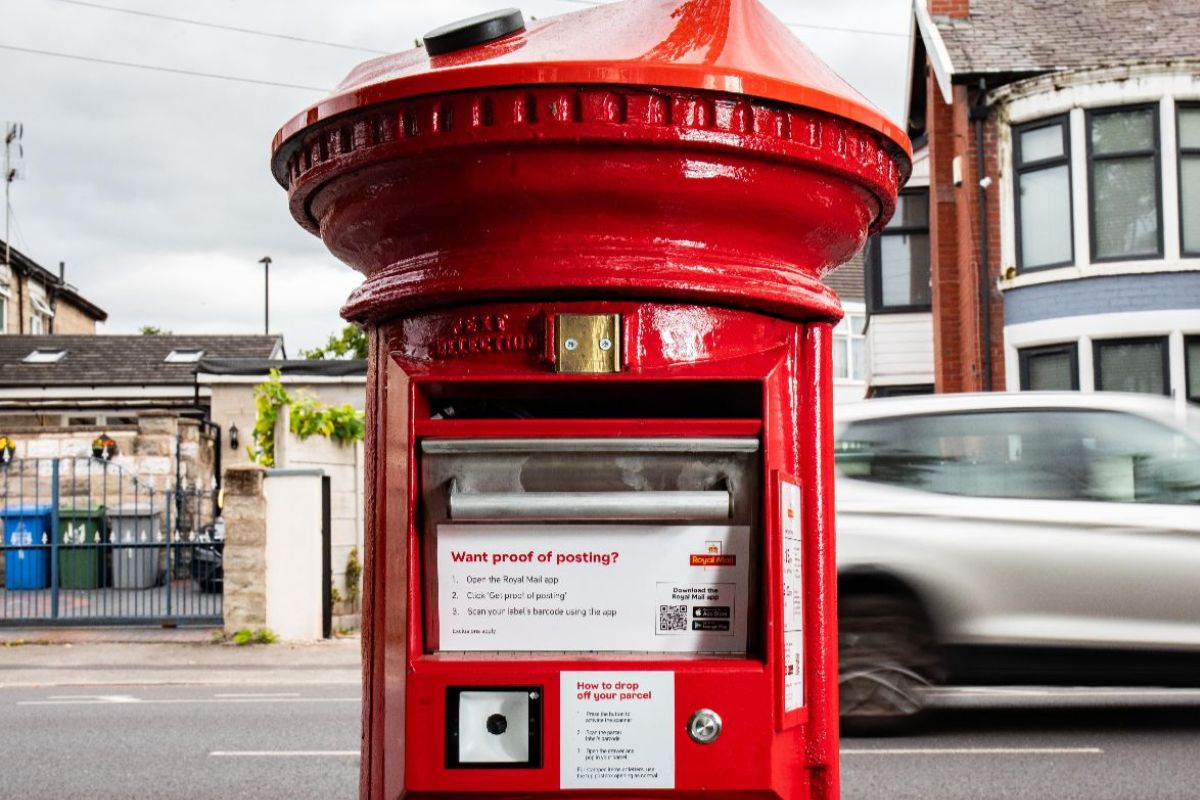
Royal Mail’s solar-powered “postboxes of the future” were sold as the biggest redesign in 175 years, and on paper they make a lot of sense, with parcel drawers, barcode scanners and proof of posting routed through the Royal Mail app.
In practice the rollout is running into one design problem after another, and the more people who try to use the things, the louder the complaints have got.
Back when the trial launched we wrote about the upgrade as a potential game-changer for marketplace sellers tired of relying on Evri and Yodel, and on paper it still could be.
Almost a year into the wider rollout of 3,500 boxes across the UK though, the picture on the ground looks very different to the press shots.
The Missing Piece Is A Label Printer
The single biggest hole in the design is the one Royal Mail seems to have decided to ignore entirely, which is that the new boxes have no way of printing a label.
To use one you have to buy your postage online at home, print the label yourself, stick it on the parcel, walk to the postbox, scan the barcode, and then answer a series of questions in the Royal Mail app about size and weight before the drawer will open.
That last step is worth thinking about for a moment, because Royal Mail has built a workflow that assumes everyone using the box owns scales, knows where they are, and is willing to weigh a birthday card mailer at 9pm on a Wednesday before walking to the corner of their street.
The reality is that outside of Vinted resellers and eBay traders, who already have a postage setup at home, almost nobody is weighing their own parcels, and plenty of young renters do not even own a set of scales unless they happen to bake.
Data from Collect+ underlines just how badly Royal Mail has misjudged this, with the convenience store network reporting that over three quarters (76%) of all its customers opt to print labels in-store rather than at home.
In other words the entire convenience model that PUDO networks have built their business on, which is “turn up with a parcel and we’ll sort it,” is the exact model Royal Mail has chosen not to offer at the postboxes.
More Steps Than The Post Office It’s Meant To Replace
By the time the average user has bought postage online, printed and stuck a label, walked to the box, scanned the barcode, downloaded the app, answered the weight and size questions, and waited for the drawer to actually open, they could have walked into a Post Office with a blank parcel and let a human being do the entire job in two minutes.
Even the most app-fluent Gen Zer would pick that over the new postbox workflow, because what Royal Mail has rolled out is not really a postbox at all, it is an unstaffed Post Office counter that demands the customer do all the staff’s work first and then troubleshoot the technology themselves.
The contrast with an InPost locker – where the whole process is open the app, get a QR code in a few taps with no label printer needed, get your locker code, and drop the parcel in – is brutal once you’ve actually done both.
The whole point of out-of-home delivery is shaving off friction, and Royal Mail has somehow built a system that adds friction at every single step compared with both the Post Office and the locker networks it’s supposed to be competing with.
The Scanner Frequently Just Does Not Work
Assuming a user has cleared all the home-admin hurdles, the next problem is that the scanner on the front of the box has a habit of flashing red and beeping at them and refusing to do anything else.
This is not always because the box thinks it is full, and it is not always because of a stuck button or a dirty lens, sometimes it simply does not work, full stop, and there is nothing the user can do about it except walk away and try the Post Office instead.
One Reddit user described turning up with a parcel, pressing the button and getting a red light and a beep with no further explanation, then trying again the next day and getting the same thing, eventually giving up and now actively avoiding the box because they cannot trust it to work.
Another wrote that they had given up on their new box entirely and were now driving to the delivery office or another Post Office, which is a fairly damning verdict on a piece of equipment whose entire reason for existing is to save people that exact journey.
For an eBay or Vinted seller who has to get a Next Day Delivery scan in before the evening cutoff, a postbox that randomly refuses to scan labels is worse than useless, because they have already paid for the postage and printed the label by the time they discover the problem.
The Solar Power Doesn’t Always Work Either
The solar panels on top are meant to power the scanner and the drawer mechanism, which is fine in principle and falls apart the moment the box gets installed somewhere that doesn’t actually catch any sun.
One user online summed up the problem neatly, explaining that their local box had been installed outside an Asda Express directly underneath the shop canopy, where it physically cannot get direct sunlight, with the result that the scanner barely ever works and the thing might as well be a normal postbox.
That sort of siting decision should not have got past the planning stage, and yet it clearly has, in multiple locations, which suggests Royal Mail’s rollout teams are putting these boxes in wherever the old red ones already stood without any thought given to the sky above them.
A solar product that lives under a canopy is not really a solar product, it is an expensive ornament with a barcode reader bolted on.
The Boxes Fill Up Fast, And Sometimes Lie About It
The other complaint that keeps surfacing on Reddit is that the boxes get full a lot quicker than the old ones, which becomes a real problem the moment a Vinted seller decides to clear a full day’s worth of orders in a single drop-off.
Worse, multiple users have reported the boxes flashing red and refusing parcels when they are nowhere near full, on top of all the cases where the scanner refuses to work for no obvious reason at all.
Reddit user OneUnderstanding918 ran a series of tests on their local box and worked out that it appears to count every item going in as a “shoebox size” regardless of how small the parcel actually is, meaning a few small jiffy bags can trigger a full warning after only two or three drops.
The same user noted that the letter slot itself has been shrunk to around 25mm, down from the 50 to 60mm slots on the old boxes, which forces anyone with a slightly thicker item to use the glitchy scanner system whether they wanted to or not, and which also makes the boxes a non-starter for older posters trying to send a small packet with stamps on it.
By their fourth or fifth attempt that same user had given up entirely and was driving to a different Post Office to drop parcels off, which is exactly the behaviour the new postboxes were meant to prevent.
The “Postboxes of the Future” Are a Decent Idea, Poorly Executed
The kindest reading of all of this is that the new postboxes are a decent idea executed badly, with a missing label printer, an unreliable scanner, a power source that doesn’t suit the locations it’s been dropped into, and a workflow that asks too much of the average customer.
The less kind reading is that Royal Mail has spent two years and serious capital building an automated Post Office that is harder to use than the actual Post Office it was meant to take pressure off, while InPost, Evri, DPD, and Collect+ keep quietly eating the parcel market with networks that already understood what the customer actually wants.
Royal Mail’s official line is that the boxes offer another convenient way to access its services and that feedback in trial areas has been positive, which is increasingly difficult to square with the experience of the people actually trying to use them on the street.
If the next phase of the rollout doesn’t a way to send without a pre-purchased label, frictionless app support, and a serious rethink of where the boxes are being sited, the “postboxes of the future” risk becoming a 3,500-strong monument to a strategy that didn’t quite think it through.